
For something that takes up such a significant portion of our lives (90,000 hours on average in case you’re curious about calculating how many you still have left to punch in), work can still be surprisingly lonely.
If you’re lucky, some of those hours might actually be a real joy, particularly if you have a ‘work bestie’. Whilst often overlooked as a light-hearted concept or something to grow out of once your graduate scheme wraps up, research tells a different story.
According to Gallup, employees who report having a best friend at work are significantly more engaged, more productive and more likely to stay with their organisation.
This is not about having someone to grab coffee with and bitch about your boss. It is about connection, trust and shared experience. And more importantly, it is about performance.
Performance is commonly framed as an individual pursuit. Personal targets. Personal output. Personal accountability. But in reality, most meaningful work happens in collaboration with others.
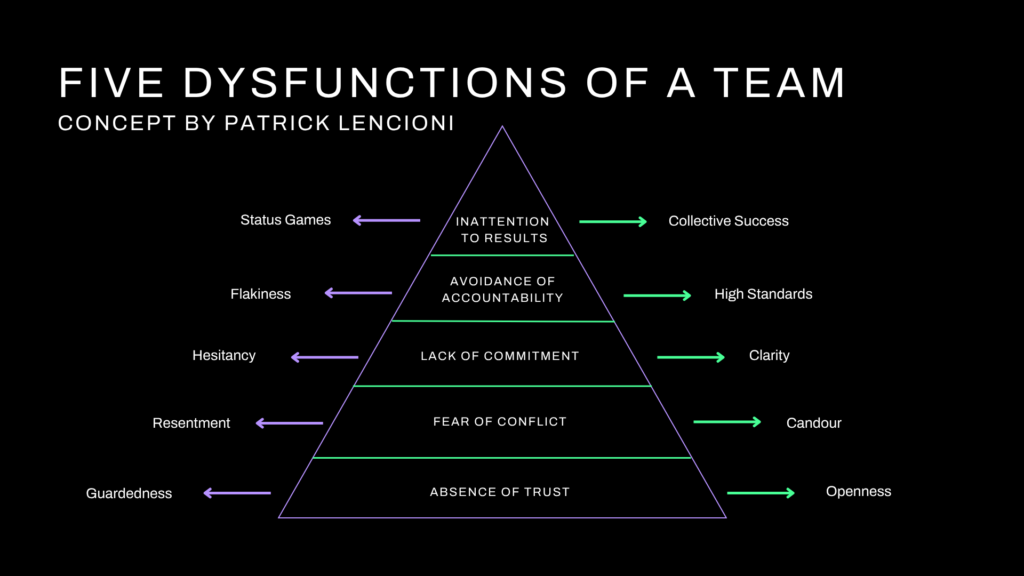
The idea of a ‘work bestie’ is just the visible tip of something deeper. High-performing environments are rarely built on isolated individuals. They are built on networks of trust. People who share information freely. People who challenge each other constructively. People who have each other’s backs when things do not go to plan. A model explored in great depth by Patrick Lencioni with specific reference to the Five Dysfunctions of a Team.
And when this goes beyond one relationship into a group dynamic, the effect compounds. Teams that feel connected do not just communicate better. They move faster, make better decisions and recover more quickly when things go wrong.
Camaraderie is not a cultural nice-to-have. It is a performance multiplier.
The challenge is that most organisations leave this to chance. They assume that relationships will form organically over time. Sometimes they do. Often they do not.
Which is why there is growing interest in hiring in pairs or small ‘pods’. Bringing people into an organisation alongside someone else, rather than as a single hire, creates an immediate shared experience. There is someone to complete onboarding with, sense-check with and build confidence alongside. Psychological safety develops faster. Early attrition decreases. The ramp-up to productivity shortens.
It is not about creating cliques. It is about designing connection from day one rather than hoping it emerges later.
For leaders, this requires a shift in thinking. Culture is not what you say in a values document. It is what people experience together on a daily basis. If you want high performance, you need to create the conditions for people to build trust, share ideas and feel part of something collective.
Historically, this has been more straightforward to facilitate. People sat together. Conversations happened between meetings. Relationships developed over time, tea breaks, or both.
That is no longer guaranteed.
Work specific to knowledge-based economies is becoming more distributed. More asynchronous. More global.
The upside is obvious. Access to talent, flexibility, efficiency. The downside is quieter, but no less important. Fewer spontaneous conversations. Less shared experience. Fewer natural opportunities for relationships to form.
Connection is no longer guaranteed. It has to be created.
At the same time, something new is emerging in how we work. AI is no longer just a tool for automation. It is increasingly being used as a thinking partner. A sounding board. A way to test ideas, build confidence and sense-check decisions before bringing them into the room.
And in many cases, it works.
Research from the London School of Economics found that employees using AI save the equivalent of one working day per week, with meaningful gains in productivity when it is embedded into everyday workflows.
Other studies show that when humans collaborate with AI effectively, output quality and productivity can improve significantly, particularly when the AI complements the individual’s way of thinking rather than replacing it.
But the most interesting shift is not just about efficiency. It is about behaviour.
People are using AI to build confidence. To practise how they articulate ideas. To prepare for difficult conversations. To refine thinking before putting it in front of others. In many ways, it is acting as a low-risk rehearsal space.
That is powerful because one of the biggest barriers to performance is not capability. It is hesitation.
If AI helps someone show up more prepared, more considered and more confident, that has a direct impact on how they contribute within a team.
However, this is where strong leadership makes or breaks it for teams. If AI becomes a substitute for interaction rather than a supplement to it, something important is lost.
AI can help you think, but it cannot build trust. It can help you prepare, but it cannot replace the shared experience that turns colleagues into collaborators. It can improve individual output, but it cannot create collective momentum on its own.
And the data reflects that tension.
While a majority of employees see AI as a valuable partner in their work, they overwhelmingly prefer it as a collaborator rather than a replacement for human interaction, with trust and effectiveness increasing when it is used alongside, not instead of, people.
The risk is not that AI replaces teams. The risk is that it quietly reduces the need to engage with them.
High-performing organisations will not leave this to chance. They will be deliberate in how AI is used, encouraging people to use it to sharpen their thinking rather than avoid conversations, to build confidence rather than replace collaboration, and to enhance contribution rather than isolate it. The goal is not to choose between human connection and intelligent tools, but to combine both in a way that strengthens performance. The most effective teams will use AI to elevate individual capability while continuing to invest in the relationships that make collective performance possible. Because work has never been just about output, it has always been about people working well together, and no system, no matter how advanced, changes that.
At MCO Performance, we help leaders and teams build environments where connection, clarity and performance go hand in hand. If you want to explore how to create teams that do not just work alongside each other but perform together, book a 15 minute discovery call and let’s talk.